
My name is Peter Hood, and I’m a senior video game designer whose worked in the video game industry for over a decade.
I began as a tester for Destiny 1 prior to its launch. Since then I have worked as a producer and test lead on various teams for 6 years before becoming a systems designer, where I have been practicing that discipline since.
I’ve been a designer for another 6 years and have been honing my craft of systems, quest, and progression design by working on very successful live service releases in the industry. After working on the Destiny IP for many years, I transitioned to Marathon and helped bring one of its core features to shipping quality. I have a player first mentality, and am always trying to strengthen relationships with my peers across teams and disciplines. Great teams make great games, and I’ve had the privilege to work with some of the best. I love deep problem spaces and learning how to grow as a professional video game designer, always looking for that next hurdle to overcome.
I’m an avid gamer, dating all the way back to 6 years old. Video games have always been my main passion and hobby. I love their interactivity and potential to expand the imagination, technology, and constantly pushing the conversation of what a ‘game’ or ‘art’ is. I want to keep pushing that conversation as far as I can. If you’re interested in getting in contact you can download my Resume
Professional Projects – Design
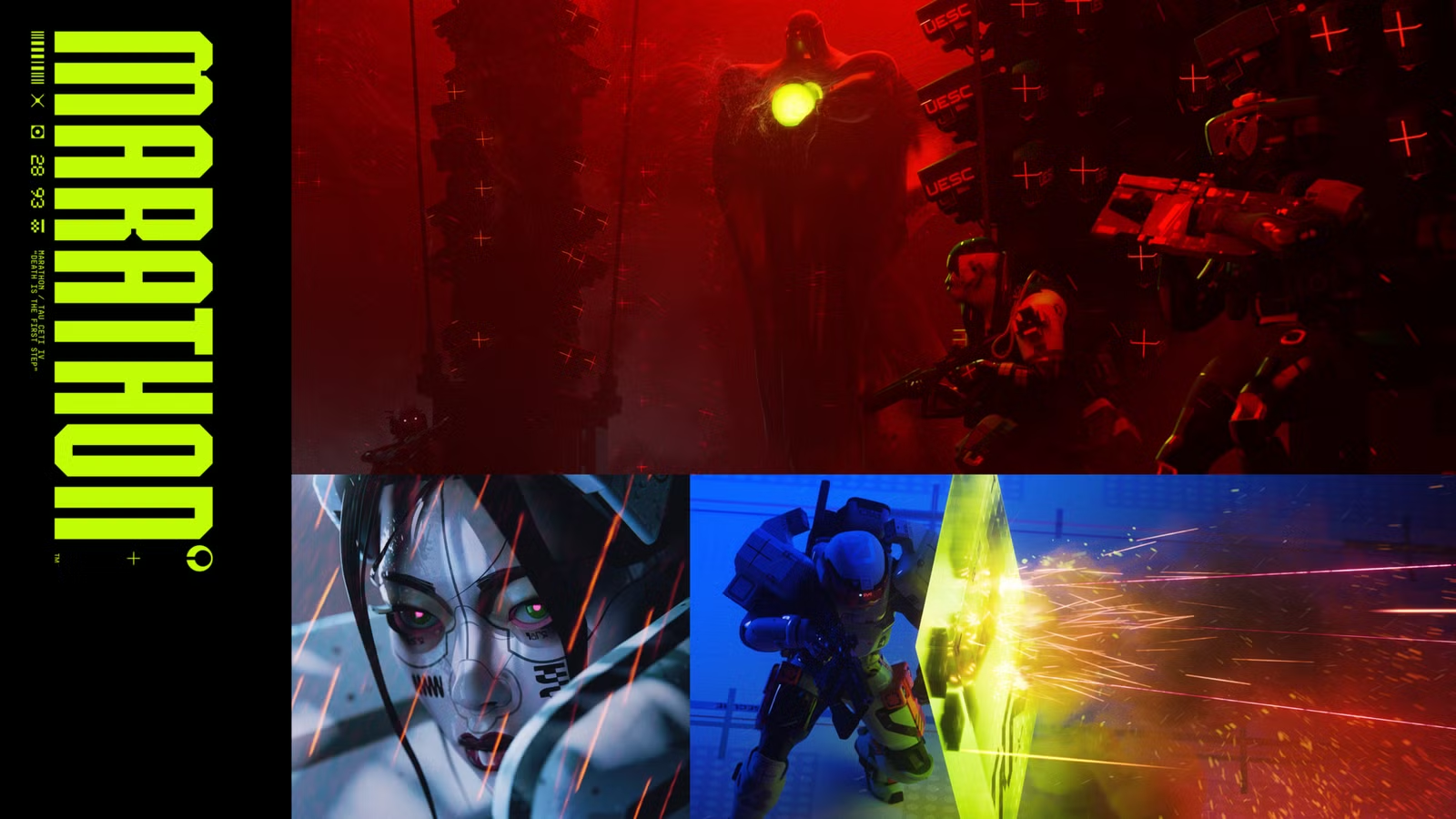
Marathon (2026)
Studio: Bungie
My Contributions:
- Designed the systemic needs of the Contracts system. Working with partner teams to address direction and pivots.
- Designed the different contract types, addressing the different needs of players.
- Established best implementation practices and design philosophies on creating contract content.
- Designed and implemented a large amount of contract content.
Destiny 2: The Final Shape (2024)
Studio: Bungie
Note: Moved to Marathon 9 months before release.
My Contributions:
- Initial designs for the mission ‘Excision’ reward plan.
- Initial designs for reward plans of the Cysts, small dungeon-esque activities, found on the expansion’s new destination.
- Initial designs for the acquisition story of the ‘kvostov’ exotic weapon.
- Initial designs for reward plans of the overthrow public events, large scale takeovers of public player areas by enemy combatants with bespoke mechanics.
Destiny 2: Lightfall (2023)
Studio: Bungie
My Contributions:
- Designed and implemented the ‘Unfinished Business’ questline. Working with partner teams to create narrative exploration of loss, and expose players to our raid spaces.
- Designed and implemented the Hall of Heroes quests, guiding players through the new destination’s content. Exploring the new planet’s culture and creating physical celebrations of player’s quest progress.
- Designed and implemented the ritual and reward plan for the Terminal Overload public event. Creating player loops through it and other content on the destination. Focused on giving the player reward agency and prevention of grind burnout.
Destiny 2: The Witch Queen (2022)
Studio: Bungie
My Contributions:
- Designed and implemented the ‘Of Queens and Worms’ questline. Working with partner teams to expose a narrative revelation and give the player a ‘living gun’ to act as an engine for delights across the destination.
- Designed and implemented reward schedule for the Wellspring, a daily rotating activity for 6 player teams. Focused on reliable reward plans that allowed for targeted grinding.
- Designed the reward progression for the endgame flow. Working with peers and across disciplines to allocate rewards and creating a smooth progression curve across the release.
Destiny 2: The Witch Queen (2020)
Studio: Bungie
My Contributions:
- Designed and implemented the stasis aspects and fragments quests given to the player in the post-campaign. Working with partner teams to give players direction in growing their new powers and narrative exploration of well-known character relationships.
- Designed and implemented reinvention of the raid reward ritual for our releases. Using data informed progression analysis to increase player engagement and reduce bounce-off points for the raid activities.
Personal Projects
In my free time, other than playing video games, I like to practice in Unreal Engine 5.
The demo I’ve taken the farthest is a gameplay system simulating being a blacksmith. I wanted to create a gameplay system that was approachable but allows for a lot of strategy and room for growth, while also having occasional problems thrown into the mix to potentially force the player to change tactics.
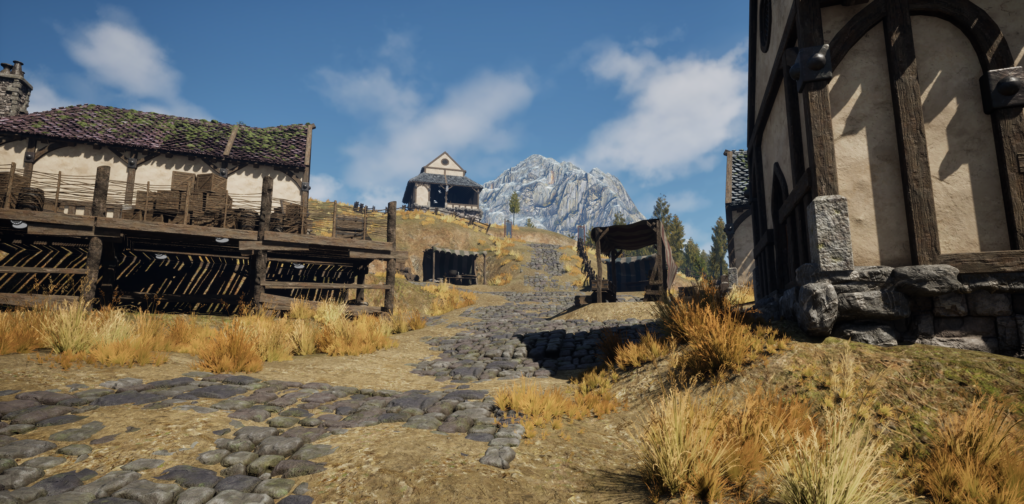
To start, using assets downloaded from the UE asset store (FAB), I’ve done some environment building to give the player a town to feel a part of.
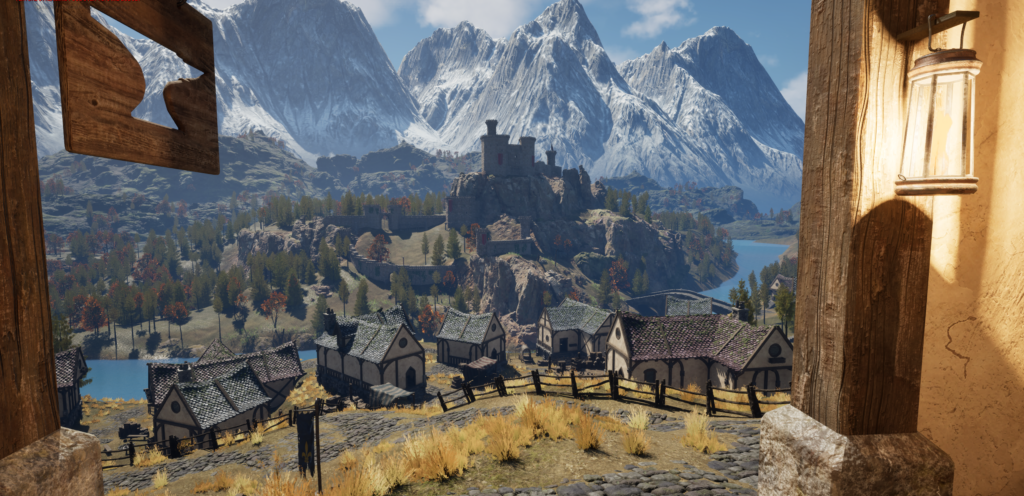
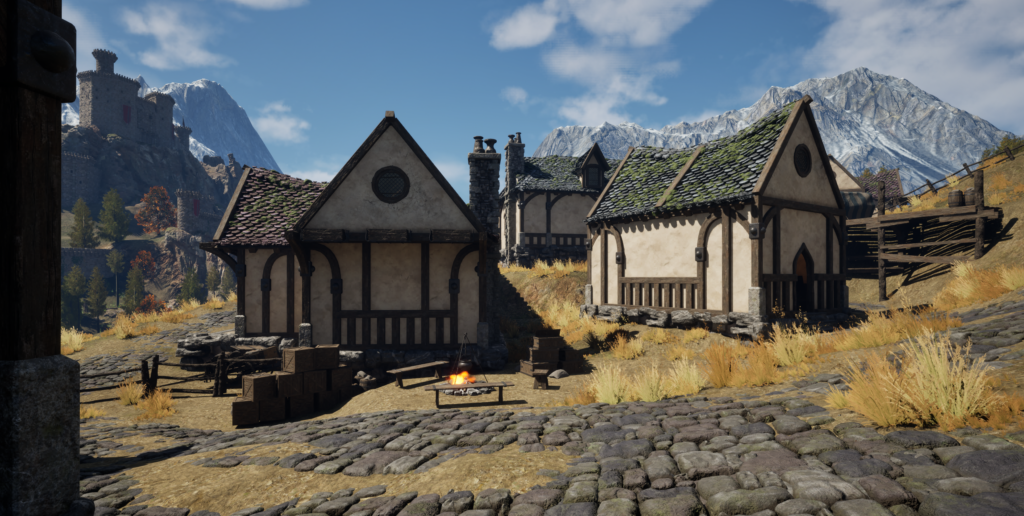
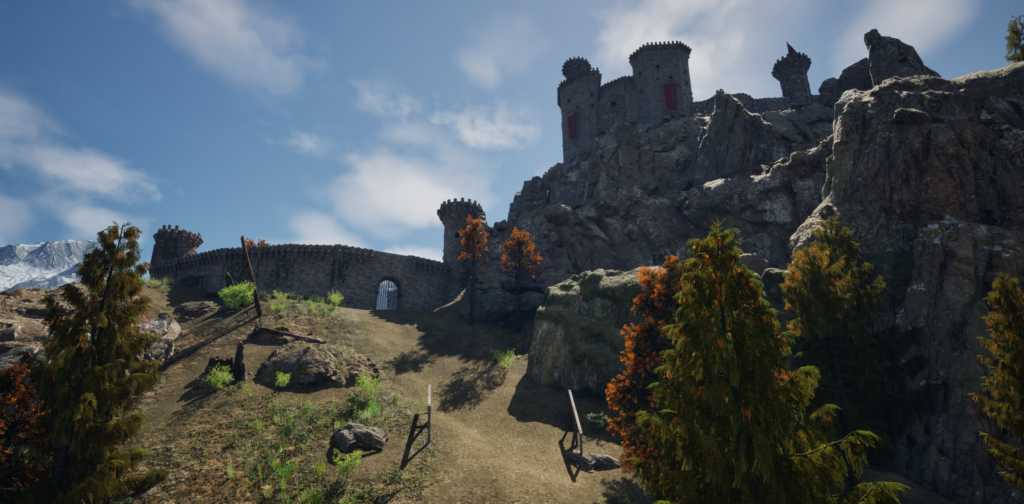
Gameplay-wise, the player begins with selecting a recipe they want to smith, the recipe controls the likelihood of different kinds of defects to appear during the creation of the item.
The ultimate goal of the smithing, is to create as high a value of item as possible. This is done by making sure the item has as high a resilience and quality as possible. The resulting value of the item is its resilience multiplied by its quality. The player must be careful though, as they use skills to increase those values, they increase the stress on the item. The higher the stress, the more likely the item will fracture, decreasing its value by a percentage. If the item is fractured three times, it is broken and has 0 value.
During the smith the player has a number of actions points where they can examine the item to identify defects, this shows the player different colored defects that are best addressed with different types of skills. The skills are ‘power’ (red) that primarily give resilience but also high stress, ‘finesse’ (green) that primarily give quality and low stress, and ‘strategic’ (blue) which interact with the other skills queued up to be used, white defects associate with any skill. If a player addresses a defect with a matching skill, they receive a matching bonus once the queue of 4 skills is consumed.
The player gains progress in groups of 4 skills at a time. I designed it this way to have it feel like the player made progress in large chunks, and force them to commit to performing a ‘group’ of skills, which takes more up front thought on how best to optimize the group.
Where I’d like to take it
So far I have a good start for a semi-complex system that has a lot of room for the player to be presented with different optimization options, and have the player then make real decisions about how best to get a high value score. This list is a lot but I like to have goals.
I plan on:
- Expanding the skill pool so there are more selectable options
- Skills that interact with stress level, and tier
- Skills that interact with defect slots more directly (change their color, give a specific slot a buff etc.)
- Integrate the ending value score into a meta-progression, ‘the town’s prosperity’.
- As the prosperity goes up, the town becomes more populated. More houses, more decoration, the castle becomes bigger etc.
- Integrate material selection into smithing. Pick iron, copper, obsidian, etc. to have different effects on your smithing
- Create a system for exploration on a grid map of the area that allows discovery of new skills and materials
- Create an in-game time management system with days tracked, and progression of days by doing smithing
- Create an order system that directs the player to create specific items by specific days
- More polish in all areas